


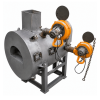
Glass Melting Furnaces are essential thermal processing systems used in the glass manufacturing industry to melt raw materials and produce a homogeneous, high-quality glass melt. By providing extremely high temperatures, precise process control, and uniform heat distribution, these furnaces enable the production of a wide range of glass products, including architectural, industrial, laboratory, and artistic glass.
Hararat Sazeh Zayandeh Rud designs and manufactures custom glass melting furnaces using advanced engineering expertise, high-quality refractory materials, and proven industrial heating technologies. Our furnaces are available in electric, gas-fired, or hybrid configurations and can be customized for small-scale, semi-industrial, and fully industrial production lines.
What Is a Glass Melting Furnace?
A Glass Melting Furnace is an industrial furnace designed to melt a mixture of raw materials—including silica sand, soda ash, limestone, and other additives—at extremely high temperatures. During the melting process, these materials are transformed into a uniform molten glass, which is then formed and carefully cooled to produce the finished product.
Depending on the glass composition and production process, melting temperatures typically range from 1,300°C to 1,600°C. Accurate temperature control is essential to achieve optimum glass clarity, consistency, and product quality.
Features
- Operating temperatures up to 1,600°C
- Precise temperature control using PID controllers or PLC automation
- Uniform heat distribution throughout the furnace chamber
- Premium refractory lining resistant to molten glass
- High thermal efficiency with optimized energy consumption
- Available in electric, gas-fired, or hybrid heating systems
- Programmable heating cycles
- Optional Data Logger for process recording
- PLC and HMI integration available
- Fully customized dimensions and production capacities
Applications
Glass melting furnaces are widely used in various industries, including:
- Architectural glass manufacturing
- Laboratory glass production
- Optical and specialty glass manufacturing
- Glass container and bottle production
- Artistic and decorative glass
- Lighting industry
- Glass fiber manufacturing
- Electronics industry
- Research laboratories and universities
- Handmade glass workshops
Technical Specifications
Technical specifications are customized according to customer requirements. Typical specifications include:
| Specification | Value |
|---|---|
| Operating Temperature Range | 1,300–1,600°C |
| Maximum Design Temperature | Up to 1,650°C |
| Temperature Accuracy | ±1°C |
| Control System | Digital PID Controller or PLC |
| Heating System | Electric, Gas, or Hybrid |
| Furnace Structure | Industrial-grade steel |
| Insulation | High-alumina refractory bricks and ceramic fiber |
| Capacity | Custom-designed according to production requirements |
| Safety Features | Over-temperature protection, emergency shutdown, and fault alarms |
Advantages of Hararat Sazeh Zayandeh Rud Glass Melting Furnaces
Our glass melting furnaces are engineered to deliver consistent melting performance, improved product quality, and maximum energy efficiency. High-grade refractory materials, precision temperature control, and optimized thermal design minimize heat loss, extend furnace life, and produce a homogeneous molten glass suitable for demanding industrial applications.
Key advantages include:
- Fully customized engineering and design
- High thermal efficiency
- Precise melting process control
- Optimized energy consumption
- Heavy-duty industrial construction
- Long-lasting refractory lining
- Easy maintenance
- Upgradeable control systems
- Professional installation, commissioning, and technical support
Temperature Control System
Precise temperature regulation is critical during glass melting, as even small temperature fluctuations can affect glass clarity, homogeneity, and final product quality. Our furnaces are equipped with advanced PID controllers or PLC-based automation systems, providing programmable heating profiles, real-time process monitoring, temperature trend visualization, and production data logging.
Thermal Insulation
To maximize thermal efficiency and reduce energy consumption, our furnaces are insulated using high-alumina refractory bricks, ceramic fiber, and other high-temperature insulation materials. This advanced insulation system maintains stable operating temperatures, minimizes heat loss, and significantly extends furnace service life.
Maintenance Recommendations
For reliable long-term operation, the following maintenance practices are recommended:
- Periodic inspection of refractory bricks
- Routine inspection of heating elements or burners
- Monitoring thermocouple performance
- Regular calibration of the control system
- Cleaning the furnace chamber
- Inspection of electrical or fuel supply systems
- Scheduled preventive maintenance
- Use of genuine replacement parts during servicing
Why Choose Hararat Sazeh Zayandeh Rud?
With extensive engineering expertise and years of experience in industrial thermal systems, Hararat Sazeh Zayandeh Rud designs and manufactures high-performance glass melting furnaces tailored to the specific requirements of modern glass manufacturers. Every furnace is constructed using premium materials, advanced control technologies, and precision engineering. Before delivery, each unit undergoes comprehensive testing to verify operational performance, temperature uniformity, and safety.
Our services include:
- Custom engineering and manufacturing
- Professional installation and commissioning
- Operator training
- Technical consultation
- Comprehensive after-sales service and technical support
Frequently Asked Questions
What is a Glass Melting Furnace used for?
It is used to melt raw materials for the production of molten glass, enabling the manufacture of industrial, architectural, laboratory, optical, and artistic glass products.
Can the furnace be manufactured in custom sizes?
Yes. Every glass melting furnace is custom-designed according to production capacity, product type, and the customer’s specific manufacturing requirements.
Which heating systems are available?
Depending on customer requirements, the furnace can be equipped with electric, gas-fired, or hybrid heating systems.
What is the maximum operating temperature?
Depending on the glass type and manufacturing process, the furnaces typically operate between 1,300°C and 1,600°C and can be engineered to reach temperatures of up to 1,650°C.


Reviews
There are no reviews yet.